Easy French Macaron Recipe – Perfect French Pastries
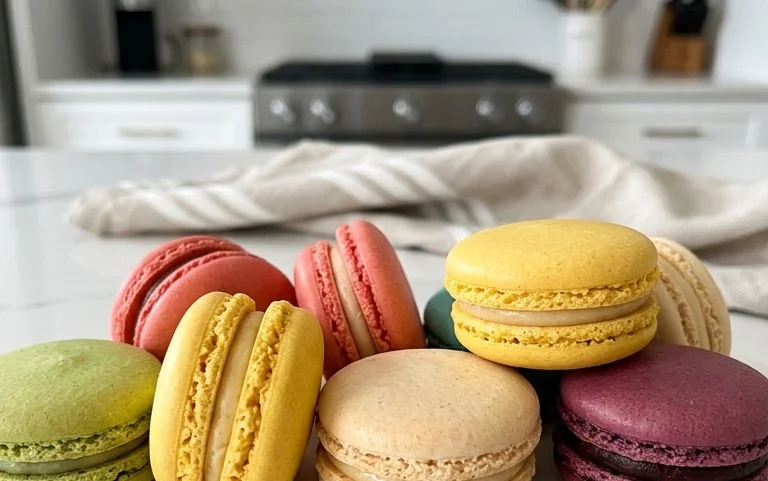
French macaron recipes are the gateway to a world of delicate, colorful, and utterly delightful confections. For so many of us, the allure of the French macaron is irresistible. These tiny, sandwiched cookies, with their crisp shells that yield to a soft, chewy interior and a luscious filling, represent a perfect balance of textures and flavors. They’re more than just a dessert; they’re a statement of elegance, a burst of joy, and a testament to patient baking. Why do we adore them so? Perhaps it’s their ethereal lightness, their vibrant hues that can brighten any occasion, or the sheer artistry involved in creating them. Mastering the French macaron might seem daunting, but with the right guidance and a touch of love, you too can achieve those signature smooth tops and perfect “feet.” Let’s embark on this exciting journey together and unlock the secrets to creating your own exquisite French macarons.
French Macaron Recipe
Embarking on the journey of making French macarons can feel a bit daunting, but I promise you, with patience and a few key techniques, you can achieve those delicate, airy, and utterly delicious cookies. These little gems are a labor of love, but the reward of biting into a perfectly crisp shell with a soft, chewy interior and luscious filling is absolutely worth it. Today, we’re going to make classic French macarons, perfect for any occasion.
Ingredients:
Preparing the Dry Ingredients
The foundation of a great macaron lies in the quality and preparation of your dry ingredients. This initial step is crucial for achieving smooth shells and preventing any grittiness.
Making the Meringue
This is where the magic truly begin extracts. The meringue provides the structure and airy texture to your macarons. Room temperature egg whites are essential for achieving a stable meringue.
- Whip the Egg Whites: In a clean, dry bowl of a stand mixer (or using a hand mixer), begin extract whipping the 120 grams of room temperature egg whites on medium-low speed. Once they become foamy, gradually increase the speed to medium-high. As soft peaks begin extract to form (meaning the peaks curl over on themselves), slowly start adding the 60 grams of granulated sugar, one tablespoon at a time. Continue whipping until stiff, glossy peaks form. This means when you lift the whisk, the meringue stands straight up without curling over. This process can take about 8-10 minutes. If you’re adding food coloring, now is the time to do it. Add the 4 drops of liquid-gel food coloring (or more to achieve your desired shade) and the 1 teaspoon of vanilla extract to the stiff meringue. Whip for another minute until the color is evenly distributed and the meringue is glossy.
- Combine Wet and Dry Ingredients: Add about one-third of your sifted almond flour and powdered sugar mixture to the meringue. Using a rubber spatula, gently fold the dry ingredients into the meringue. Do this by scraping down the sides of the bowl and then lifting and folding from the bottom. Don’t stir or beat; think of it as a gentle folding motion to incorporate the ingredients without deflating the meringue. Repeat this process with the remaining dry ingredients, adding them in two more additions.
- Achieve the Lava-like Consistency: Continue folding until the batter reaches a thick, flowing, ribbon-like consistency. A good way to test this is by lifting your spatula; the batter should fall off in a thick ribbon that slowly melts back into the rest of the batter. It should flow smoothly like lava. You should be able to draw a figure-eight with the batter before it breaks. This stage is crucial; be patient and fold just until this consistency is achieved. It’s better to slightly undermix than overmix.
- Pipe the Macarons: Transfer the batter to a piping bag fitted with a round tip (about 1/2 inch). Line baking sheets with parchment paper or silicone baking mats. Pipe small, uniform circles onto the prepared baking sheets, leaving about an inch of space between each one. To pipe, hold the bag vertically and apply even pressure, stopping as you finish the circle. To encourage even shells and remove air bubbles, firmly tap the baking sheets on your countertop several times. This helps the piped batter settle and spread slightly.
- Rest and Develop a Skin: This resting period is absolutely vital. Let the piped macarons sit at room temperature for at least 30 minutes, and up to 1 hour (depending on your humidity). You’ll know they’re ready to bake when you can gently touch the surface of a macaron and it feels dry and no longer sticky. A skin has formed. This skin prevents the macarons from bursting and encourages the “feet” to develop during baking.
- Bake to Perfection: Preheat your oven to 300°F (150°C). Once the macarons have developed a skin, carefully place one baking sheet in the preheated oven. Bake for 12-18 minutes. The exact baking time will vary depending on your oven. The macarons are done when they have developed their characteristic “feet” and the tops feel firm and don’t wobble when gently nudged. They should lift cleanly from the parchment paper when done. If you notice the tops browning too quickly, you can loosely tent the baking sheet with aluminum foil for the remaining baking time. Once baked, remove the baking sheets from the oven and let the macarons cool completely on the baking sheets before attempting to move them. This is crucial to prevent them from breaking.
- Assemble and Mature: Pair up your cooled macaron shells by size. Pipe or spread your Vanilla Buttercream Frosting (or your chosen filling) onto the flat side of one shell and gently sandwich it with another shell. For the best flavor and texture, it’s highly recommended to “mature” your macarons. Place the filled macarons in an airtight container in the refrigerator for at least 24 hours. This allows the flavors to meld and the shells to soften slightly, creating that perfect chewy interior. Before serving, let them sit at room temperature for about 20-30 minutes.
-
150 grams sifted super-fine almond flour
-
180 grams powdered sugar
-
1/4 teaspoon salt
-
120 grams large egg whites (at room temperature)
-
60 grams granulated sugar
-
4 drops liquid-gel food coloring
-
1 teaspoon pure vanilla extract
-
Vanilla Buttercream Frosting
-
Step 1
Sift together the almond flour, powdered sugar, and salt. Set aside. If using whole eggs, separate them and let the whites come to room temperature for at least 30 minutes. -
Step 2
In a clean, dry bowl, whisk the egg whites until foamy. Gradually add the granulated sugar while continuing to whisk until stiff, glossy peaks form (meringue). -
Step 3
Gently fold the sifted dry ingredients into the meringue in three additions. Add the food coloring and vanilla extract during the last addition and fold until just combined, creating a batter that flows like lava. -
Step 4
Transfer the macaron batter to a piping bag fitted with a round tip. Pipe small, uniform circles onto baking sheets lined with parchment paper or silicone mats. -
Step 5
Tap the baking sheets firmly on the counter to release air bubbles. Let the macarons sit at room temperature for 30-60 minutes until a skin forms. -
Step 6
Preheat your oven to 300°F (150°C). Bake for 15-18 minutes, or until the macarons have developed ‘feet’ and are no longer sticky to the touch. -
Step 7
Let the macarons cool completely on the baking sheets before carefully removing them. Match up similar-sized shells and fill with Vanilla Buttercream Frosting or your choice of filling.
The Macaronage: Folding is Key
This is arguably the most critical step in macaron making, often referred to as “macaronage.” It’s the process of folding the dry ingredients into the meringue. Overmixing will result in flat, spread-out cookies, while undermixing will lead to lumpy, cracked shells.
Piping and Resting
Piping precise, uniform macarons is important for aesthetics and even baking. The resting period allows a “skin” to form, which is essential for developing those characteristic “feet” during baking.
Baking the Perfect Macarons
Baking is where your careful preparation pays off. Oven temperature and timing are key to achieving that perfect macaron texture.
Filling and Enjoying
Once your macaron shells are completely cool, it’s time for the best part: filling them!
Making macarons is a rewarding process that requires attention to detail. Don’t be discouraged if your first batch isn’t perfect; even experienced bakers have their off days! With practice and by following these steps carefully, you’ll soon be enjoying your own homemade French macarons. Bon appétit!
Conclusion:
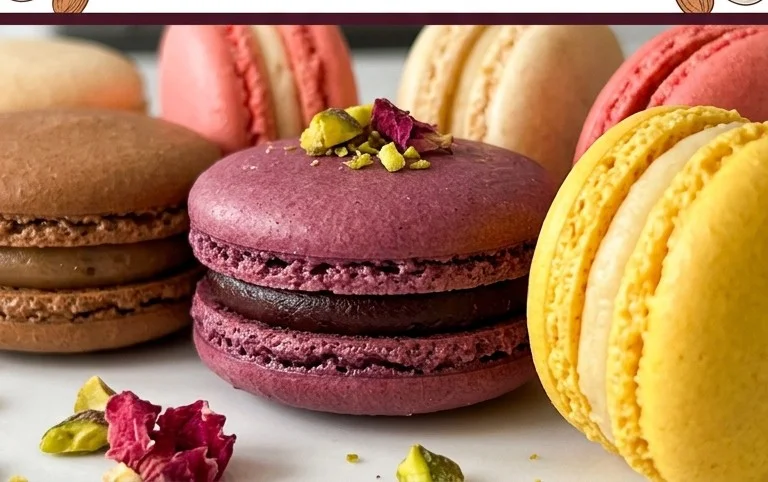
And there you have it – your guide to mastering the delicate art of the French macaron! I hope you’re feeling inspired and ready to embark on this delicious journey. This French macaron recipe is truly a labor of love, but the reward of those perfectly crisp shells with a chewy interior and luscious filling is absolutely unparalleled. They’re not just a dessert; they’re edible works of art that are sure to impress your friends and family. Don’t be discouraged if your first attempt isn’t perfect; macarons have a reputation for being a bit temperamental, but with a little practice and patience, you’ll be creating stunning batches in no time.
These delightful cookies are incredibly versatile. Serve them at your next tea party, as a sophisticated dessert after a special meal, or simply as a sweet treat to brighten your afternoon. Get creative with your fillings! Classic ganaches, fruit curds, or buttercream frostings are always winners, but consider exploring more adventurous flavor combinations like lavender-honey, matcha-white chocolate, or even a spiced pear.
I truly encourage you to give this French macaron recipe a try. The satisfaction of biting into your own homemade macaron is incredibly rewarding. So, dust off your apron, gather your ingredients, and let’s bake some magic!
Frequently Asked Questions:
Why are my macarons cracked?
Cracked macarons are often a sign of oven temperature being too high, or the meringue not being stiff enough. Ensure your oven is accurately calibrated and that you’ve whipped your egg whites to stiff, glossy peaks. Resting the piped macarons before baking also helps develop a skin that prevents cracking.
What does “macaronage” mean?
Macaronage is the crucial stage where you fold the dry ingredients (almond flour and powdered sugar) into the meringue. The goal is to achieve a lava-like consistency – the batter should flow slowly off your spatula in a thick, continuous ribbon, falling back on itself like melted lava. Overmixing will result in flat, spread-out macarons, while undermixing will lead to lumpy, cracked shells.
How should I store my macarons?
Macarons are best stored in an airtight container in the refrigerator. They will develop a more pleasant texture after a day or two when the filling has slightly softened the shells. They can also be frozen, which is a great way to have them on hand for whenever a craving strikes!
Classic French Macaron Recipe
A detailed recipe for making delicate and delicious French macarons from scratch, with a classic vanilla buttercream filling.
Ingredients
Instructions
Important Information
Nutrition Facts (Per Serving)
It is important to consider this information as approximate and not to use it as definitive health advice.
Allergy Information
Please check ingredients for potential allergens and consult a health professional if in doubt.