
Easy Miso Soup Recipe – Delicious & Quick
Miso Soup Recipe: Let’s talk about a dish that warms you from the inside out and is a staple in so many of our kitchens. This isn’t just any soup; it’s a bowl of pure comfort, a flavor explosion that’s both incredibly simple to make and deeply satisfying. You might be wondering, what makes this humble soup so universally beloved? It’s the magic of miso itself – that fermented soybean paste, offering a rich, savory, umami depth that’s utterly addictive. It’s the perfect starter to a meal, a light lunch on its own, or a comforting companion during a chilly evening. We love it for its versatility, its health benefits, and that incredibly authentic taste that transports us straight to Japan with every spoonful. Get ready to learn how to craft your own perfect bowl of this delightful Miso Soup Recipe.
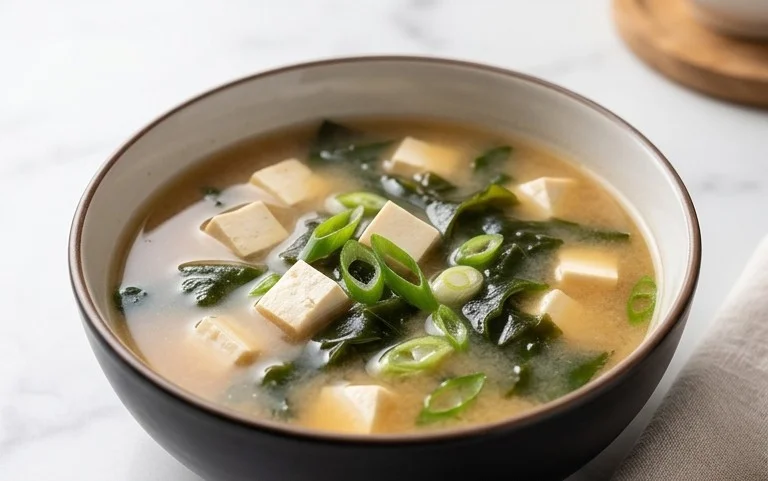
Miso Soup Recipe
There’s a reason miso soup is a staple in Japanese cuisine. It’s incredibly comforting, wonderfully savory, and surprisingly simple to make at home. This recipe focuses on the classic elements that make miso soup so satisfying, offering a delicious and nourishing bowl that’s perfect for breakfast, lunch, or a light dinner. It’s a fantastic way to warm up on a chilly day or to add a burst of umami to any meal. The beauty of miso soup lies in its versatility; while this recipe provides a foundational approach, you can easily customize it with your favorite additions as you become more comfortable.
Ingredients:
Getting Started: Preparing Your Ingredients
Before we dive into the cooking process, let’s make sure all our ingredients are ready. This prep work will make the actual cooking go smoothly and ensure a delicious outcome.
First, if your dried seaweed isn’t already in small pieces, you might want to give it a quick snip with kitchen scissors. This helps it rehydrate evenly and makes it easier to eat.
Next, let’s talk about the tofu. Silken tofu is ideal for miso soup because it’s incredibly delicate and melts beautifully in the broth. Carefully cut your silken tofu into small, bite-sized cubes. I usually aim for pieces that are about ½ inch to ¾ inch square. Handle it gently to avoid breaking it apart too much at this stage.
Finally, chop your scallions. The green parts are where most of the flavor and fresh aroma reside, so focus on those. You can chop them finely for a more subtle garnish or a bit more coarsely if you enjoy a more pronounced oniony bite.
The Miso Soup Magic: Cooking Instructions
Now for the fun part – bringin extractg all these wonderful ingredients together to create a truly satisfying bowl of miso soup.
1. Rehydrate the Seaweed and Warm the Dashi: In a medium saucepan, pour in your 2½ cups of dashi. Add the 1 heaping tablespoon of dried seaweed to the dashi. Let the seaweed sit in the cool dashi for about 5-10 minutes. This allows it to rehydrate and soften before the soup gets hot. Once rehydrated, place the saucepan over medium heat. We want to bring the dashi to a gentle simmer, not a rolling boil. A gentle simmer is key for allowing the flavors to meld without making the seaweed tough or the tofu break down too quickly. Keep an eye on it as it heats up.
2. Add the Tofu: Once the dashi is simmering gently and the seaweed has softened, carefully add your pre-cut pieces of silken tofu to the pot. Stir very gently, or better yet, just nudge them in with a spoon. We want the tofu to warm through and absorb some of the dashi flavor, but we don’t want to break it into tiny pieces. Let the tofu simmer in the broth for about 2-3 minutes, just long enough to heat it thoroughly. You’ll see the tofu become slightly more translucent as it warms.
3. Dissolve the Miso Paste: This is arguably the most crucial step for achieving the perfect miso flavor without any grittiness. Turn the heat down to low, or even off completely. You do NOT want to boil your miso paste. Boiling can diminish its delicate flavor and beneficial probiotics. Take your 2-2½ tablespoons of miso paste and place it in a small bowl or a heatproof measuring cup. Ladle a small amount of the warm dashi broth from the saucepan into the bowl with the miso paste. Using a whisk or a fork, vigorously whisk the miso paste into the dashi until it’s completely smooth and lump-free. This process is called “tempering” the miso and ensures it dissolves evenly into the soup.
4. Incorporate the Miso into the Soup: Once your miso paste is fully dissolved and smooth, carefully pour the miso mixture back into the saucepan with the dashi, seaweed, and tofu. Stir gently to distribute the miso throughout the broth. At this stage, taste the soup. This is your chance to adjust the miso level. If you prefer a stronger miso flavor, whisk in another ½ tablespoon or so of miso paste (tempered in a little broth first, as in the previous step). Remember that different types of miso paste have varying saltiness and intensity, so start with the recommended amount and adjust to your personal preference.
5. Final Touches and Serving: With the miso fully incorporated and the soup heated through (again, on very low heat – remember, no boiling!), it’s time to serve. Ladle the hot miso soup into individual bowls. Garnish generously with your chopped scallions. The fresh green scallions add a lovely pop of color and a bright, fresh flavor that perfectly complements the rich, savory broth. Serve immediately while it’s piping hot. Miso soup is best enjoyed fresh, as the textures can change if left to sit for too long.
Enjoy this simple yet profoundly satisfying bowl of homemade miso soup! It’s a true taste of Japanese comfort.
Conclusion:
There you have it – a wonderfully simple yet incredibly satisfying Miso Soup Recipe! This recipe is fantastic because it’s not only quick and easy to prepare, making it perfect for a busy weeknight, but it also delivers a depth of umami flavor that is both comforting and invigorating. The delicate balance of dashi and miso creates a savory broth that’s incredibly versatile. We hope you’ll find this recipe a staple in your kitchen, just as it is in ours.
Miso soup is best enjoyed piping hot, immediately after preparation. It’s traditionally served as a starter, but it also makes a light and healthy meal when paired with rice and other small dishes. Think of it as a wonderful companion to sushi, tempura, or even a simple salad. Feel free to get creative with your additions! Tofu, seaweed, green onions, mushrooms, and even a sprinkle of sesame seeds are all excellent choices.
Don’t be afraid to experiment with different types of miso paste to discover your favorite flavor profile. Red miso offers a bolder, earthier taste, while white miso is milder and sweeter. A blend of both can create a wonderfully complex broth. We wholeheartedly encourage you to give this Miso Soup Recipe a try – you might be surprised at how easy it is to create such a delicious and authentic dish at home!
Frequently Asked Questions:
What is dashi and how can I make it?
Dashi is the foundational broth for most Japanese soups, including miso soup. The most common type is made from kombu (dried kelp) and katsuobushi (dried bonito flakes). You can make it by simmering kombu in water until just before boiling, then removing the kombu and adding katsuobushi for a few minutes before straining. Many find it easiest to use instant dashi granules, which are readily available in Asian markets.
Can I make miso soup without dashi?
While dashi provides the authentic Japanese flavor, you can absolutely make a delicious miso soup without it. You can substitute vegetable broth or even chicken broth for a lighter, more Western-influenced taste. However, to achieve that signature umami, consider adding a pinch of MSG or a small amount of soy sauce to your broth if you’re omitting dashi.
How long does miso soup last in the refrigerator?
Miso soup is best consumed fresh, but it can be stored in an airtight container in the refrigerator for 2-3 days. It’s important to note that the flavor and texture of the miso might change slightly upon reheating. It’s generally recommended to add the miso paste just before serving to preserve its delicate flavor and beneficial probiotics.
Miso Soup Recipe
A simple and comforting Miso Soup recipe, perfect for a quick meal or appetizer.
Ingredients
-
2½ cups Dashi
-
1 heaping tablespoon dried seaweed
-
4 oz silken tofu (cut into small pieces)
-
2-2½ tablespoons miso paste (or to taste)
-
1 tablespoon scallion (chopped)
Instructions
-
Step 1
In a medium pot, bring the dashi to a gentle simmer over medium heat. -
Step 2
Add the dried seaweed and let it rehydrate for about 2-3 minutes. -
Step 3
Reduce the heat to low. In a small bowl, whisk the miso paste with a ladleful of the simmering dashi until smooth. This prevents clumps. -
Step 4
Gently stir the dissolved miso paste back into the pot. Do not boil the soup after adding miso, as it can diminish its flavor and beneficial properties. -
Step 5
Add the silken tofu pieces to the pot and let them warm through for about 1 minute. -
Step 6
Ladle the soup into bowls and garnish with chopped scallions just before serving.
Important Information
Nutrition Facts (Per Serving)
It is important to consider this information as approximate and not to use it as definitive health advice.
Allergy Information
Please check ingredients for potential allergens and consult a health professional if in doubt.